
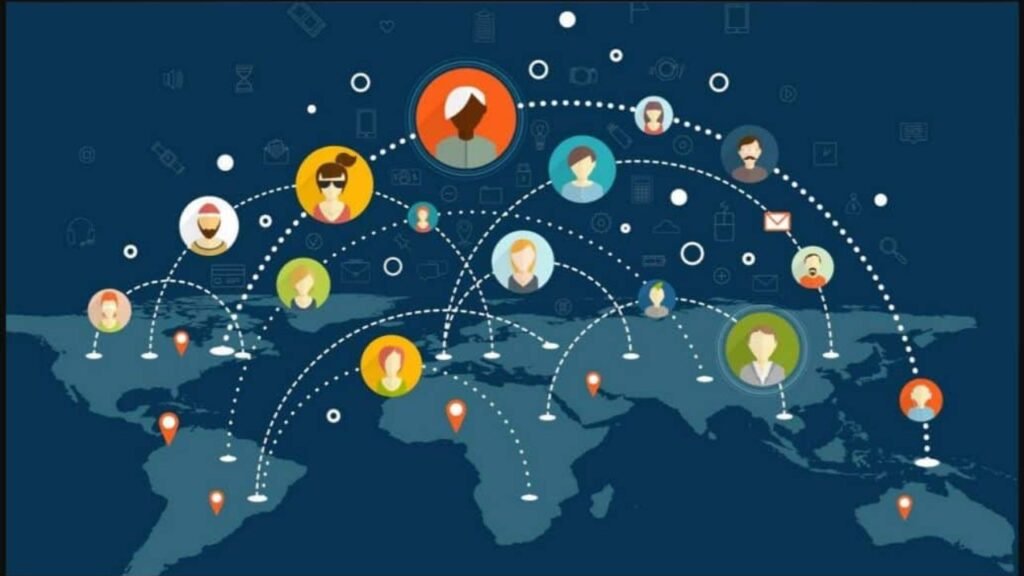
Walk through a shopping mall in Asia, Europe, or North America and the experience can feel strangely familiar. The same clothing brands, coffee chains, smartphones, and social media platforms appear everywhere. Music trends cross borders overnight, memes travel faster than news, and global events are discussed in real time across continents. Yet despite this shared surface, societies feel more polarized than ever—politically, socially, and culturally. How can the world feel so similar and so divided at the same time?
Understanding this paradox requires looking beyond appearances and examining how globalization, technology, identity, and power interact in modern life.
The Rise of a Shared Global Surface
Global culture has been shaped largely by economic integration and digital connectivity. Multinational companies distribute the same products worldwide because scale reduces costs and increases profit. Streaming platforms promote globally appealing content, while social media algorithms amplify trends that perform well across languages and regions.
As a result, everyday experiences have become standardized. Fashion cycles move at a global pace. Work culture borrows the same productivity tools and corporate language. Food trends spread rapidly, turning local dishes into international favorites. This creates a sense of familiarity, especially in urban spaces, where lifestyles often look interchangeable.
This shared surface culture can make the world feel smaller and more connected than at any point in history.
Algorithms Create Common Trends, Not Common Understanding
While technology connects people globally, it does not connect them equally or neutrally. Social media platforms are designed to maximize engagement, not understanding. Algorithms tend to promote content that triggers strong emotional reactions, reinforcing existing beliefs rather than challenging them.
This leads to a paradox. People across the world may use the same platforms, follow similar trends, and reference the same events, yet experience them through highly personalized filters. Two individuals can consume entirely different interpretations of the same reality, shaped by language, ideology, and algorithmic preference.
Global sameness, in this sense, is superficial. Underneath it lies fragmentation.
Local Identity Becomes More Important in a Global World
As global culture expands, local identity often becomes more emotionally charged. When traditions, languages, or social norms feel threatened by homogenization, communities respond by holding more tightly to what makes them distinct.
This is visible in the revival of regional languages, local fashion, traditional food practices, and cultural rituals. At the same time, political movements increasingly emphasize national, religious, or ethnic identity as a counterweight to global influence.
Rather than disappearing, differences become sharper. The more culture feels shared, the more people seek meaning in what separates them.
Economic Inequality Shapes Cultural Division
Global culture often presents itself as accessible to everyone, but access is uneven. The same brands, technologies, and lifestyles are visible worldwide, yet only some can afford to participate fully. This gap creates resentment and disillusionment.
When people see global success stories that feel unattainable in their own circumstances, cultural similarity turns into frustration. The promise of globalization does not always match lived reality. This economic divide feeds social tension and fuels narratives that blame outsiders, systems, or elites.
In this way, cultural sameness can coexist with deep structural inequality, widening the sense of division rather than reducing it.
Global Media, Local Interpretation
Global events are experienced simultaneously across the world, but they are not understood the same way. News, entertainment, and online discourse are filtered through cultural values, historical context, and local concerns.
A film, protest, or political decision may symbolize freedom in one place and threat in another. The global circulation of information increases exposure, but it does not erase perspective. Instead, it multiplies interpretations.
This constant comparison—between “us” and “them,” success and failure, progress and loss—intensifies cultural friction.
The Illusion of Unity
Global culture often sells the idea of unity: shared values, shared goals, shared future. But unity without equity and dialogue is fragile. When people feel unheard or misrepresented, shared culture feels imposed rather than inclusive.
True cultural connection requires more than shared consumption. It requires empathy, context, and the willingness to accept difference without turning it into division.
Without that foundation, global culture risks becoming a thin layer over unresolved tensions.
Finding Balance in a Connected World
The challenge of modern culture is not choosing between global and local, but learning how they can coexist. Global tools can amplify local voices instead of replacing them. Cultural exchange can deepen understanding rather than flatten identity.
Recognizing that similarity does not mean sameness is a crucial step. The world can share platforms, technologies, and trends while still honoring deep differences in values, history, and experience.
Global culture feels similar everywhere because systems encourage uniformity. It feels deeply divided because people are searching for meaning, fairness, and belonging within those systems. Understanding this tension helps explain not only where culture is today, but where it may be headed next.